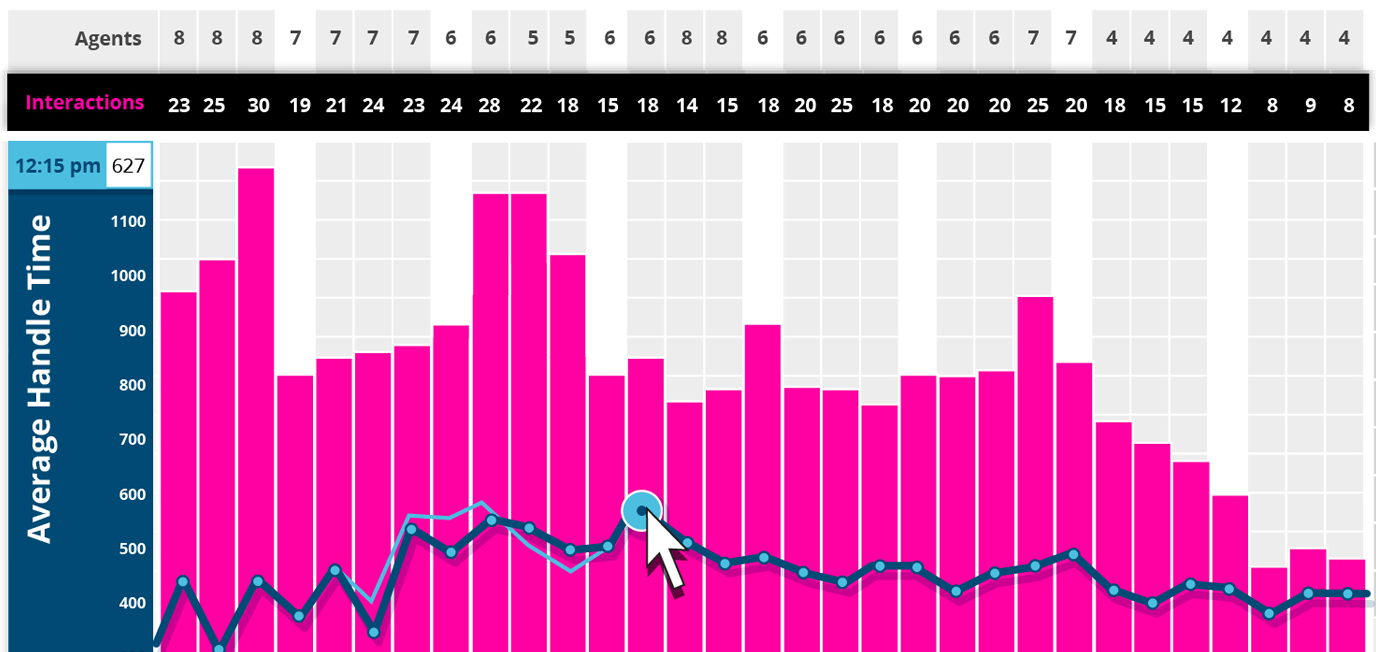
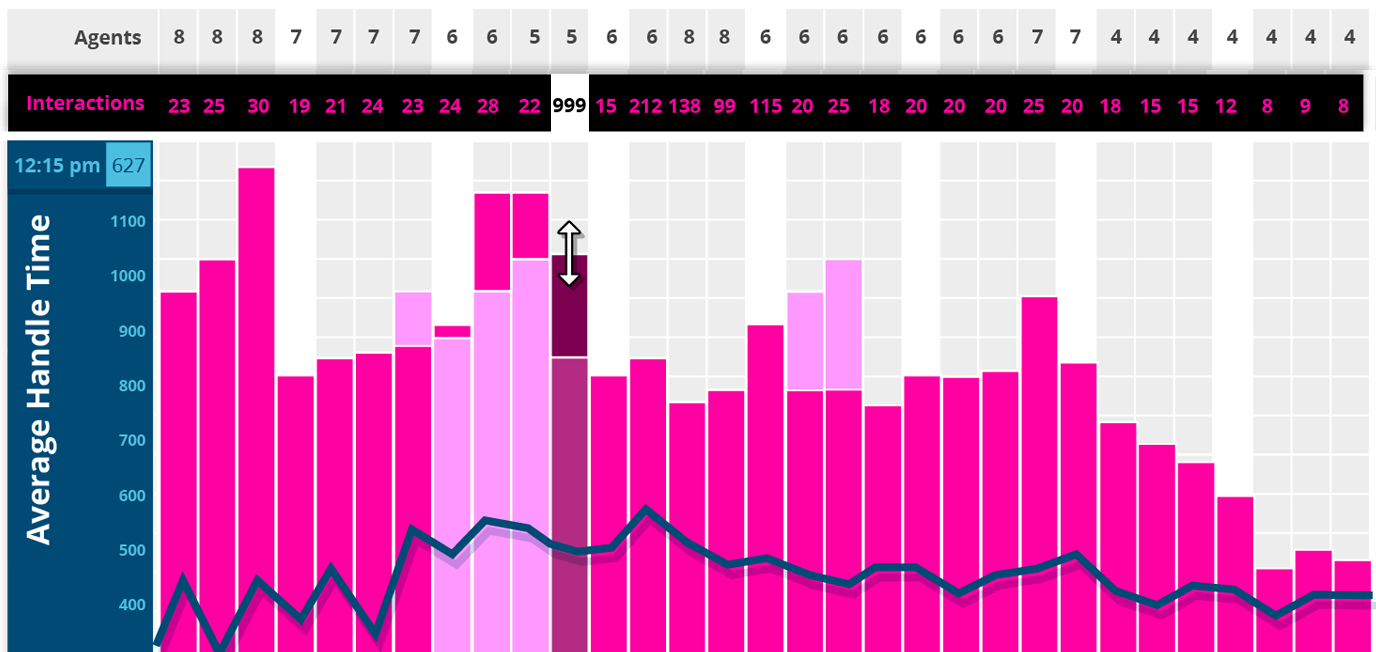
Contact centres strive to achieve the highest service level possible with the agents they have. To do this they attempt to best match agent schedules to the peaks and valleys of contact volumes throughout the day getting the right agents taking the right calls at the right time. The EICC WFM includes a forecasting and scheduling component which will present the forecast traffic levels and a proposed schedule to meet the forecasted levels. The EICC WFM forecasts the traffic levels for a specific time interval based on historical call traffic. The number of agents required to handle the forecast call traffic is calculated using the Erlang-C formula and the EICC WFM assigns Full Time Equivalent (FTE) agents to the schedule. The supervisor can then determine which agents will fill the FTE scheduled places from the list of available EICC agents.
Workforce Management (WFM) software solutions exist that provide forecasting and schedule adherence. The agent size to justify the cost of these WFM solutions is typically > 50 agents. Contact centers without WFM software typically create schedules using Excel spreadsheets. Supervisors will then attempt to match shifts start/end times, breaks and lunches to the peaks and valleys of calls. To track adherence supervisors print login/logout reports and break/lunch start/stop times to the schedule to determine adherence. This is typically a very time consuming activity and there can be significant productivity savings from implementing a simple WFM solution.
The EICC Workforce Management module provides the tools to report and compare workforce requirements with call volume requirements providing a way to schedule agents based on forecast call traffic. The Workforce Management functionality provides graphs of the relevant call volume requirements, allows the entry of a schedule and reporting to compare the entered agent schedule with historical call volume.